I’m Prince Gabriel Okocha. I run Trispark Academy and The Bloggers Forum. and I have trained over 500 bloggers in this model. This guide explains how it works, what it costs, what results look like, where it fails, and how to stay inside Google’s rules.
Income disclaimer: The figures below are my personal experiences and ranges I see across the bloggers I train. They are not promises. Many people make no profit, especially at the start. Arbitrage involves real money at risk.
Quick answers
What is arbitrage blogging? Buying traffic at one price and monetising it at a higher price through ads on your own blog.
Is it profitable? It can be. In my experience, monthly returns on ad spend commonly fall between 1.5x and 5x, and some cases reach 10x or more, depending on AdSense CPC or AdX eCPM and on what the traffic platform charges. It can also lose money when the numbers are wrong.
How much does it cost? Ad spend runs from about ₦2 million to ₦100 million over a period, depending on each person’s budget.
Is it legal? Yes, buying traffic and showing ads is legal. It must still comply with the policies of both the ad platform that sends the traffic and the ad network that pays you. See the compliance section.
How arbitrage blogging works
- You publish useful content on a blog in a niche where advertisers pay well.
- You run ads on Facebook, Google Ads or another traffic platform, sending people to those articles.
- Your blog shows ads from AdSense or AdX. When visitors view or click them, you earn.
- You compare the two numbers. Traffic cost per visitor against revenue per visitor.
- You scale what is profitable and cut what is not.
The formula in plain terms:
Profit = (Revenue per visitor × visitors) − (Traffic cost per visitor × visitors)
A 3x return means ₦3 earned for every ₦1 spent. That is ₦2 of profit before your other costs.
The three numbers that decide everything
| Number | What it means | Where you see it |
|---|---|---|
| CPC / eCPM (revenue side) | What advertisers pay you per click or per 1,000 impressions | AdSense or AdX reports |
| Traffic cost | What you pay per click or visitor | Facebook Ads Manager, Google Ads |
| Traffic quality | How real and engaged the visitors are | Analytics, session duration, pages per visit |
When revenue per visitor stays above traffic cost per visitor, you profit. The 10x cases come from a high-paying AdSense CPC or AdX eCPM combined with cheap, good-quality traffic. Both can change from week to week.
What results look like
| Typical range | |
|---|---|
| Ad spend | ₦2M – ₦100M, depending on the individual’s budget |
| Monthly return on spend | 1.5x – 5x |
| Best cases | 10x or more |
| Worst cases | Below 1x (a loss) |
Student results
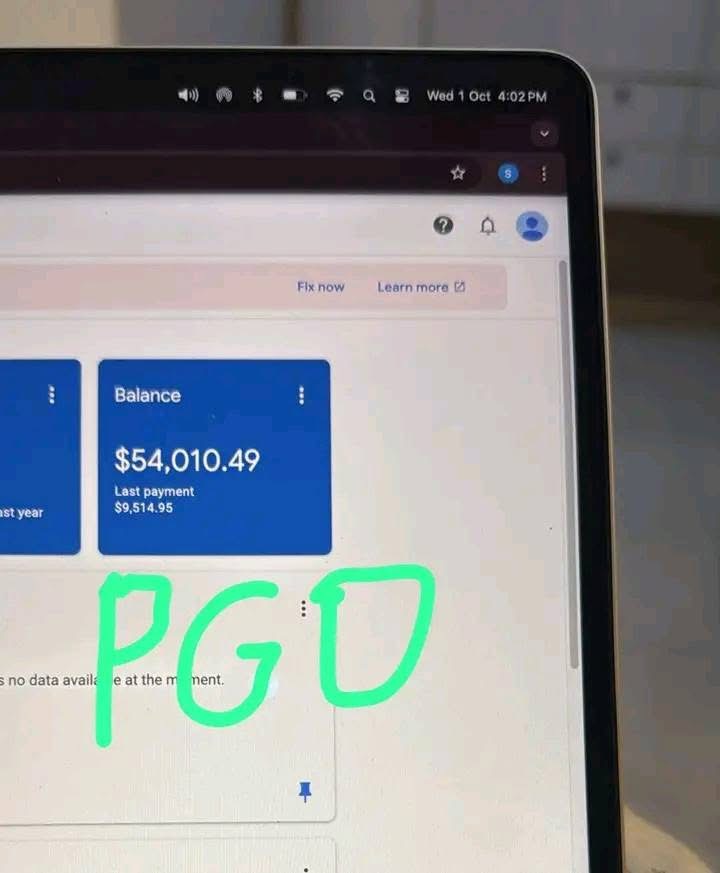
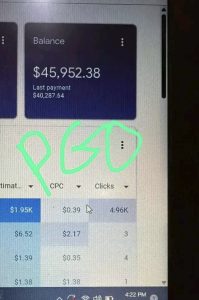
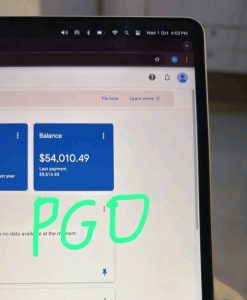
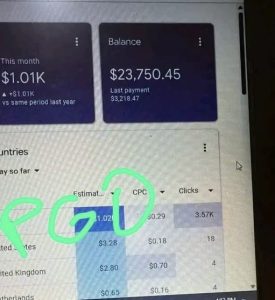
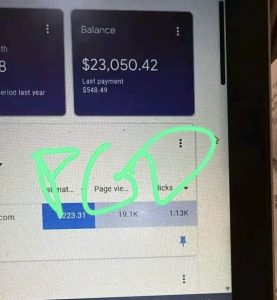
Many Trispark Academy students share their own results publicly. You can see their posts on my PGO Facebook page and on Instagram. Results differ from person to person, and these are the students’ own accounts.
What makes some campaigns work
- Niche choice. Some topics attract advertisers who pay more per click. Jobs, education and finance-adjacent topics are often tested, but competition and policy rules also apply.
- Content that deserves the visit. Pages must be useful, original and complete, not an empty screen with ads.
- Site navigation. Visitors should find their way around. A confusing site wastes paid traffic.
- Page speed and mobile layout. Most Nigerian traffic is on phones with variable connections.
- Tracking. Know your spend, clicks, revenue and return by campaign and by page.
- Testing small first. Raise the budget only after the numbers are positive.
AdSense policy compliance: the rule I teach
My stance is simple: comply with every policy, as fully as you can. An account ban costs far more than any short-term gain. In practice that means:
- Copyright. Publish your own content, or content you have the right to use. Do not copy other sites.
- Thin or low-value content. Every page needs real, useful content. No screens with only ads, no auto-generated filler.
- Traffic quality. Buy traffic from sources that deliver real people. Avoid bots, incentivised visits and any traffic that is hard to trust.
- Invalid clicks. Never click your own ads, ask others to click, or design the layout to trick clicks.
- Site navigation and layout. Clear menus, working pages, no deceptive placement, no ads that mislead.
- Required pages. About, Contact, Privacy Policy and Disclaimer pages that are real and complete.
- Both sides’ rules. Facebook and Google Ads have their own advertising policies. Follow them too.
Policies change, so read the current official versions in the AdSense Help Centre and your traffic platform’s policy pages before you start and again every few months.
The risks
- Losing money. If traffic costs more than it earns, you lose your ad spend.
- Account action. Policy violations can lead to limited ads or a ban.
- Changing numbers. CPC, eCPM and traffic prices move with seasons, competition and platform changes.
- Traffic quality problems. Low-quality visitors earn little and can trigger invalid-traffic flags.
- Dependence on platforms. You do not control Google or Facebook.
Reduce these by starting small, tracking daily, following policy, and never spending money you cannot afford to lose.
Arbitrage blogging vs. SEO blogging
| Arbitrage blogging | SEO blogging | |
|---|---|---|
| Traffic source | Paid ads | Free search traffic |
| Speed | Fast, from the first day | Slow, often months |
| Upfront cost | High (ad spend) | Low |
| Main risk | Losing ad spend | Waiting a long time |
| Income pattern | Margin on spend | Grows without ongoing ad costs |
Many bloggers combine them: arbitrage for fast cash flow, SEO for long-term traffic that costs nothing to keep.
How to start (the short version)
- Learn the model and the policies before spending anything.
- Set up a fast, clean blog with the required pages.
- Choose a niche and write substantial original content.
- Apply for and get approved on your ad network.
- Set up tracking.
- Run a small test campaign and measure revenue against spend.
- Scale only the campaigns that stay profitable.
[Link to: How to Start Arbitrage Blogging, step by step]
Learn it with a community
- Trispark Academy teaches the full process with mentorship.
- The Bloggers Forum is a global community for SEO and arbitrage bloggers.
FAQ
What is arbitrage blogging in simple words? You pay for visitors, show them ads on your blog, and keep the difference when ad earnings are higher than your cost.
Is arbitrage blogging still worth it in 2026? It can be for people who track numbers carefully and follow policy. Results vary, and there are losses as well as gains.
How much money can you make from arbitrage blogging? In my experience, monthly returns on ad spend commonly sit between 1.5x and 5x, and some reach 10x or more. Some campaigns lose money.
How much do I need to start? Budgets among the bloggers I train range from ₦2 million to ₦100 million. Start with what you can afford to lose and test small.
Is arbitrage blogging legal and allowed by Google AdSense? Buying traffic is legal. AdSense publishers must follow its programme policies, including traffic quality, invalid clicks, content value and copyright. Read the current policies.
What is the difference between AdSense CPC and AdX eCPM? CPC is what you earn per click. eCPM is earnings per 1,000 impressions. Both set your revenue per visitor.
Can I do arbitrage blogging in Nigeria? Yes. Many Nigerian bloggers do. You need a way to pay for ads, an approved ad account and an approved publisher account. You can also do it anywhere in the world. I have trained people from Pakistan, India, Bangladesh, Poland, USA, UAE, UK, Canada, Germany and so on.
What gets an AdSense account banned? Invalid clicks, poor-quality traffic, copied or thin content and deceptive layouts are common causes.
Continue Reading: How to Start Arbitrage Blogging: Step by Step, Is Arbitrage Blogging Legit? Legal, AdSense-Safe or a Scam?
About the author: Prince Gabriel Okocha is a top Nigerian arbitrage blogger and mentor to many young bloggers in Africa and globally.
Last updated: [November, 2026]. Figures are examples from my experience and are not guaranteed. This page answers all you need to know about arbitrage blogging in Nigeria, what is arbitrage blogging, AdSense arbitrage, is arbitrage blogging legit, how to start arbitrage blogging etc.