An AdSense rejection email tells you that Google will not show ads on your site yet, and the reason is almost always something you can fix. The trouble is that the wording is short and the same few messages cover very different problems. This guide goes through each type of AdSense rejection email, says what it means in plain language, and gives you a fix list you can work through before you reapply.
Everything here is built on Google’s own AdSense Help pages (the ones on why an account was not approved, what to do when your site is not ready to show ads and how to fix policy issues). Google also says the specific reason for your own account is in your AdSense account and in the email it sent, so read both before you change anything.
If you have not applied yet, start with how to get AdSense approval on a new blog. If you have been rejected, keep reading.
First, find your actual reason
Do not guess from a forum thread. Sign in to AdSense, open the Sites page and look at the status of your site, then read the email. Match what you find to the types below. Quotes in this article are short phrases from Google’s help pages, and everything else is my own explanation.
One note on names. People online use labels such as “low value content”, “site down” and “requires user action”. Those are the words applicants use. Google’s own pages use slightly different headings, so I have matched each popular label to the nearest official one so you can see what Google actually checks.
Type 1: Your ad code is missing or incomplete
What it means: Google could not find the AdSense code on the site you submitted, or the code is broken.
How to fix it:
- Copy the code again from your AdSense account.
- Paste it between the head tags of the live site you submitted. Google asks whether you pasted it into the same site you used to sign up.
- Check the page source in your browser and search for the code. If you cannot find it, a caching plugin or a theme setting may be removing it. Clear the cache and test again.
- If you would rather not paste code, Google offers a second route: verify the site in Search Console, and it will keep checking whether the site is ready.
Type 2: “Site down” or “site not working”
What it means: Google’s pages call this a site that is unreachable. The crawler could not open your site.
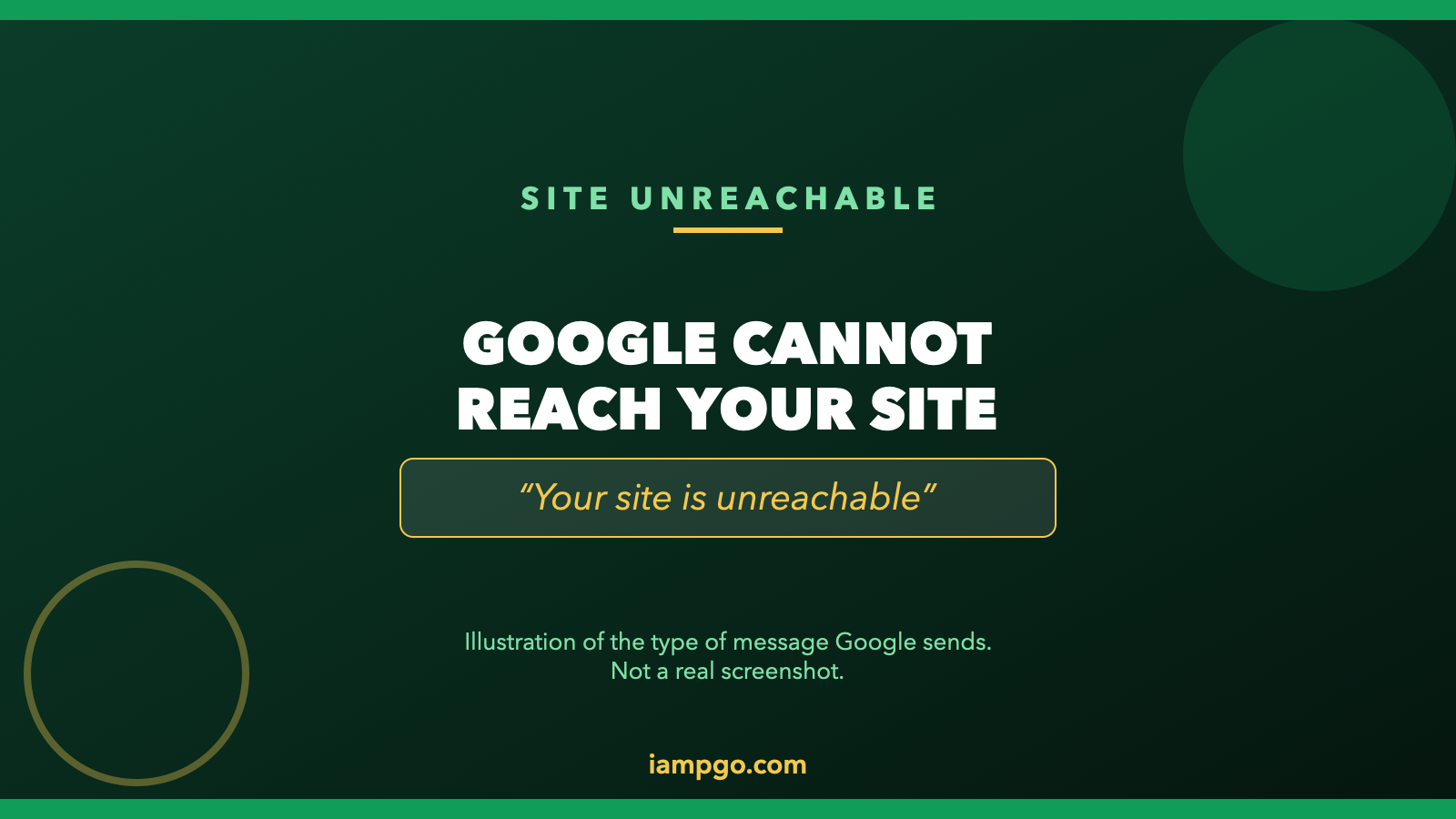
Typical heading: “Your site is unreachable”.
How to fix it, using Google’s own checks:
- Confirm you entered the correct URL. If it is wrong, remove the site from your list and add the right one.
- Make sure the site is published and live.
- Remove any password or login on the site while you are being reviewed.
- Check your robots.txt is not blocking the AdSense crawler.
- If you use HTTPS, make sure the SSL certificate comes from a recognised authority (not self-signed) and that HTTP redirects to HTTPS.
Cheap or unreliable hosting is a common cause here. If your site keeps going offline, see domain vs hosting for what to look at.
Type 3: Insufficient content, “under construction”
What it means: Google says the site has too little text, or looks as if it is still being built.

Typical phrase: found to have “too little text”.
How to fix it:
- Write complete articles with full sentences and paragraphs. Headlines alone do not count.
- Do not rely on images, videos or animations. Google says sites made mostly of those may not be approved.
- Finish the site before you apply. Do not apply with a bare template, a “coming soon” page or pages with placeholder text.
- Place the code on a live page with real content. A test page with nothing but the code will not be approved.
Type 4: Low value content, content quality
What it means: This is the one most people mean by “low value content”. Google says there is not enough original, rich content of value to users.

Typical phrase: not enough “original, rich content”.
How to fix it:
- Check each post against a simple test: would a reader learn something here that they would not get from the first five search results? If not, rewrite it with your own experience, examples or research.
- Remove or rewrite pages that are copied, lightly reworded or auto-generated. Google tells publishers not to place the code on auto-generated pages or pages with little or no original content.
- Cut affiliate-heavy pages. Google says affiliate content should be a minor part of the site unless you add real value.
- Merge near-duplicate pages. Google suggests expanding or consolidating pages that are very similar.
- Update the site regularly so it looks alive.
Type 5: Copyrighted or scraped material
What it means: Google says ads may not be placed on sites with scraped or copyrighted content. That includes sites that copy other sites with small changes, and sites built mainly to embed videos or images from elsewhere without adding value.
How to fix it:
- Delete anything you copied. Replace it with your own writing.
- Use images you own or have a licence for, and credit them where required.
- If you embed a video or quote a source, add your own explanation and opinion around it so the page has value by itself.
- Run your key posts through a plagiarism checker and rewrite what it flags.
Type 6: Site navigation issues, including “requires user action”
What it means: Google found the site difficult to navigate.
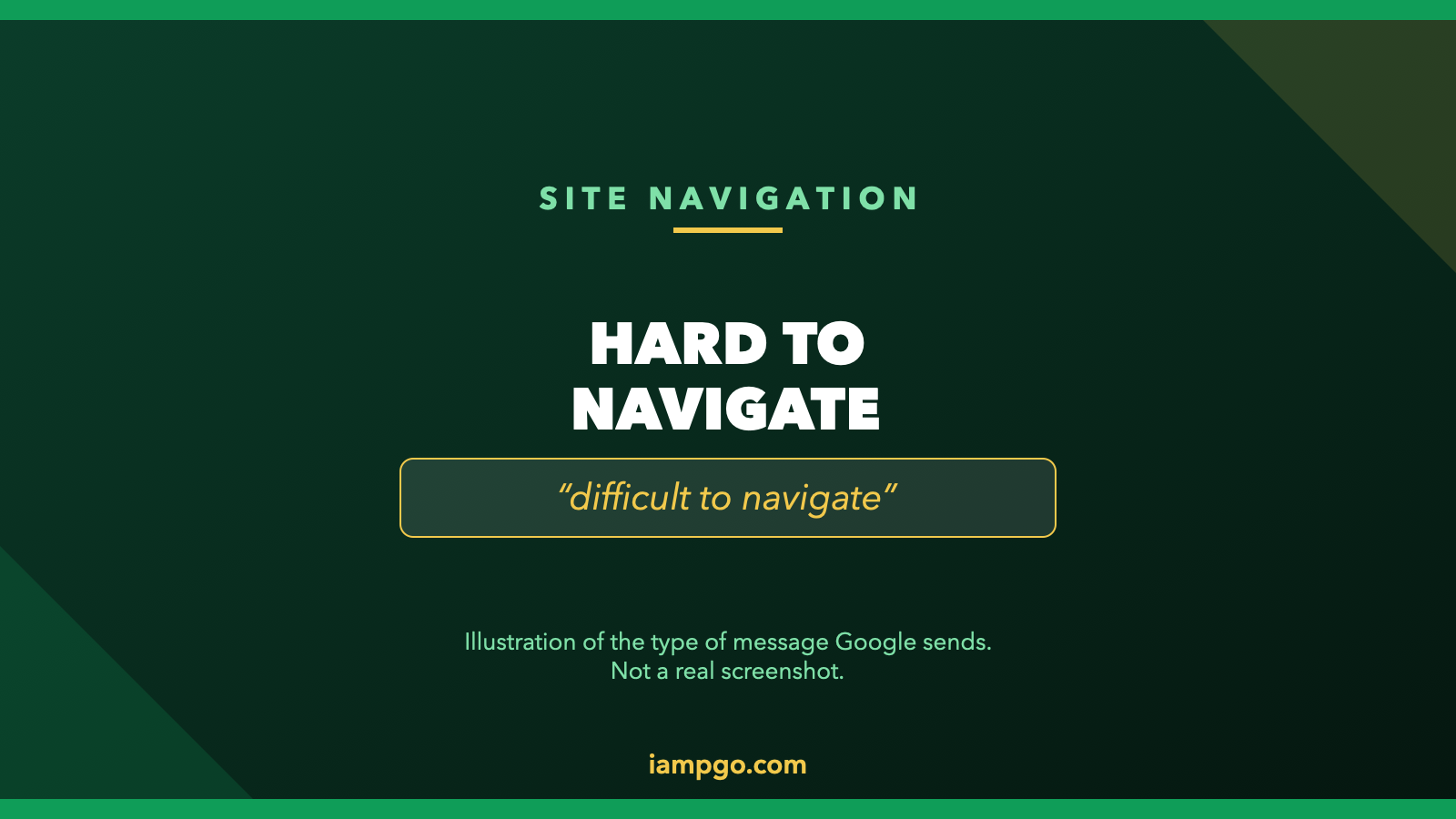
Typical phrase: “difficult to navigate”.
In all my years working with AdSense, I have never come across Google using the exact label “requires user action to see content”. The closest official wording is the navigation list, which names redirects, pages behind a login or restricted access, broken links, excessive pop-ups, dialers, and pages under construction or not yet launched. If your content only appears after a login, a form, a forced click or a pop-up, treat it as this type.
How to fix it:
- Make sure your content shows up without a login or forced action.
- Fix every broken link and remove redirects you do not need.
- Build a clear menu and group posts by topic or category.
- Test the site on a phone. Check that menus, drop-downs and buttons work.
- Do not link to missing, irrelevant or misleading pages.
Type 7: Traffic source issues
What it means: Google says ads may not run on pages that receive traffic from certain sources.
Typical phrase: “issues with its traffic sources”.
Google’s examples are paid-to-click programs, unwanted emails, and ads shown because of software on a visitor’s device.
How to fix it: Stop any traffic source that fits those examples, and review your pages against Google’s landing page quality guidelines and the Spam policies for Google web search. If you buy traffic, read what arbitrage blogging is and the mistakes that get AdSense accounts banned before you spend more.
Type 8: Content policy violations
What it means: Your site does not comply with the AdSense Program policies. It may contain prohibited content, or break a specific rule.
How to fix it:
- Read the AdSense Program policies from top to bottom, not just the headlines.
- Check the Better Ads Standards and the Ad Experience Report in Google’s webmaster tools to find annoying or misleading ad experiences.
- Remember that Google may review all pages of the site, not only the page where you put the code.
- Remove or change the offending content, then confirm in AdSense that it is fixed.
Type 9: Duplicate account
What it means: Google allows one AdSense account per publisher. Another account shares your payee name, address, phone number or similar details.
How to fix it: Find the other account (ask colleagues or anyone who set one up for you before), close it, then sign in to your main account to confirm. Google says this must be done even if you do not recognise the duplicate at first, and that publishers whose accounts were terminated for invalid traffic or policy violations cannot open new ones.
Type 10: Unsupported language
What it means: Most of your content is in a language AdSense does not currently support.
How to fix it: Check Google’s list of supported languages. Translate the site into a supported language, or apply with another site that is in one.
Type 11: “Your site has policy violations” with no policy named
This is the message that frustrates people most, because it tells you something is wrong and not what. It appears as a general statement that the site has policy violations, with no single policy or page pointed out.
Say it plainly: nobody outside Google knows the exact trigger in this case. Not a freelancer, not a forum moderator, not me. Anyone who tells you they know the one thing to change is guessing. The honest fix is a full audit of the site.
How to audit the site
Work through these in order. Google may review every page, so audit the whole site.
- Content. Look for thin pages, copied or spun text, auto-generated pages and near-duplicates. If you published articles in bulk with little editing, rewrite or remove them.
- Trust pages. Make sure you have an About page, a Contact page and a Privacy Policy. I would never apply without them, because a site with no way to identify or contact its owner looks weak.
- Navigation. Fix broken links, remove needless redirects, make sure no page needs a login to be read, and finish any “coming soon” pages.
- Prohibited content. Read the Program policies and the Google Publisher Policies line by line against your pages, including comments, images and embedded media.
- Layout and ads. Check for pop-ups that block content, misleading buttons and anything that tricks people into clicking.
- Traffic sources. Review where visitors come from and stop any source that fits Google’s examples.
- Technical access. Site live, HTTPS valid, robots.txt open, code in place.
Use the Policy center
If your account is already active and Google limits ads on a site, open the Policy center and click Fix next to the site. The Issue details page describes what Google found, and screenshots can show examples on your pages. Fix the problem across the site, not just on the example.
How to request a review or appeal
- Sign in to AdSense and open Policy center.
- Click Fix next to the site, then Start review process.
- Choose your reason: you removed the ad code, you fixed the violations, or you believe the violations are not present on the page.
- Tick the confirmation box and click Request review.
Check the Status column. If the review is rejected, you get an email. Read the details again, make more changes, then ask again.
How long to wait before reapplying
Google does not give one fixed waiting period. It says reviews usually take a few days but can take 2 to 4 weeks. It also says the Start review process button can be inactive if the site was reviewed and rejected several times recently, and the page shows the date you can ask again. So the practical answer is: do not reapply until the audit is finished, and do not spam reviews.
Reapply checklist
- I read the exact reason in AdSense and in the email.
- The site is live, public and loads over valid HTTPS.
- The AdSense code is in the head of the live site, or the site is verified in Search Console.
- Every article is original, complete and useful.
- No copied, spun or auto-generated pages.
- About, Contact and Privacy pages are in place.
- The menu works and no link is broken.
- Nothing needs a login or forced action to be read.
- I checked the Program policies and Publisher Policies against the whole site.
- My traffic comes from honest sources.
- I have one AdSense account only.
- I wrote down what I changed, so I can see the progress.
Want a deeper grounding in building a site Google can approve? At Trispark Academy we teach blogging and online skills.
Common questions
Can I reapply the same day?
You can, but there is no point unless you have fixed the cause. A second rejection for the same problem wastes time.
Is a rejection a permanent ban?
Not in the cases above. Google’s pages describe fixes and a review process for each one. The exception is an account closed for invalid traffic or policy violations, where Google says new accounts are not allowed.
Does “low value content” mean I need more posts?
Not necessarily. It means the posts need more original value. Ten thin posts will not fix what two excellent ones would.
Will paying someone guarantee approval?
No. Treat guarantees as marketing. Only Google decides.
What if the email names no policy?
Audit the whole site against the Program policies and Publisher Policies, fix everything you find, then request a review.
Should I remove my ad code while I fix things?
Google lets you remove all ad code if you do not want to display ads, and says the policy issue disappears from the Policy center after 7 to 10 days but remains in its system. You can request a review later after you add the code back and fix the issues.
More from PGO. Learn to build a site that lasts at Trispark Academy, host it with Trispark Hosting, or listen to our BTC Podcast.